

Ready, Fire, Aim!
On firing squads, guillotines, and the spectacle of capital punishment

When the DOJ announced this week that it’s bringing back a crowd favorite — firing squads — it got me thinking: Why stop there? After all, the guillotine was retired in France in 1981, and there must be loads of them rusting away in junkyards. You could probably find a couple at the Paris flea market.
The comparison of firing squads with the National Razor isn’t as far-fetched as it might at first appear, and it all has to do with the notion of spectacle.
Let me explain.
During the Ancien Régime in France (up to 1789), capital punishments were meted out rather haphazardly. Your method of dying was pegged to your social class. The happy few got their head lopped off with a saber, whereas nobodies like you or me might get hacked with an axe. Or hanged. Or even (if you pissed off the church enough) burned at the stake.
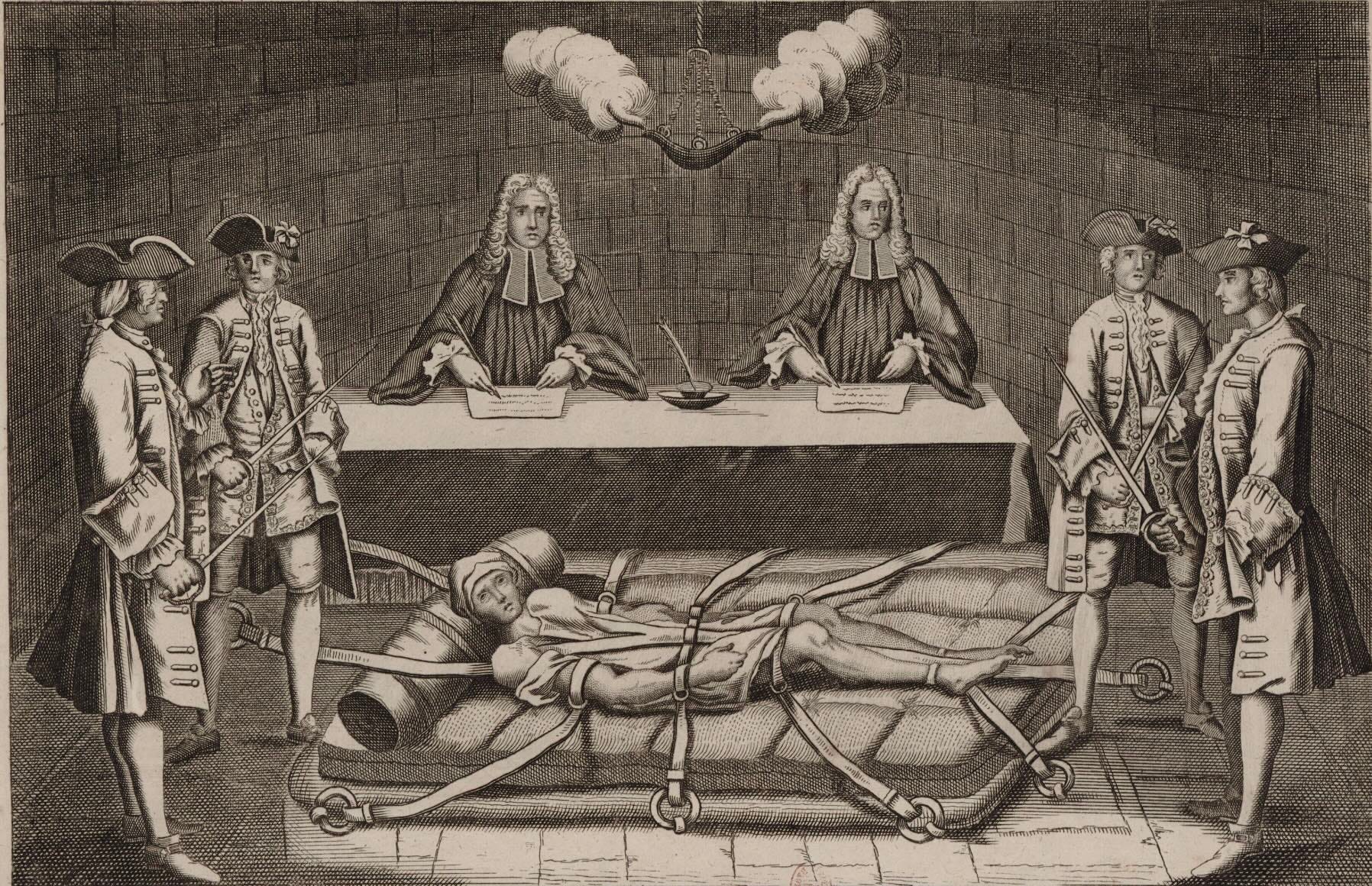
In a famous case from 1757, Robert-François Damiens received the whole kit and caboodle — tortured, scalded, dipped in molten lead, castrated, and finally quartered by a team of horses. They even roasted all the leftover bits. Allegedly Damiens had predicted that morning that it was going to be “a pretty bad day,” setting a new standard for understatement.
Of course, he kind of had it coming, for he’d tried to pick off the king — a little number known as a regicide. It was therefore important to make an example of him, exacting public retribution the way you might pillory your critics, or pick off your political opponents, or, I dunno, jail the head of your Federal Reserve. It had to be spectacular.
The new fashion
The practice changed during the French Revolution.
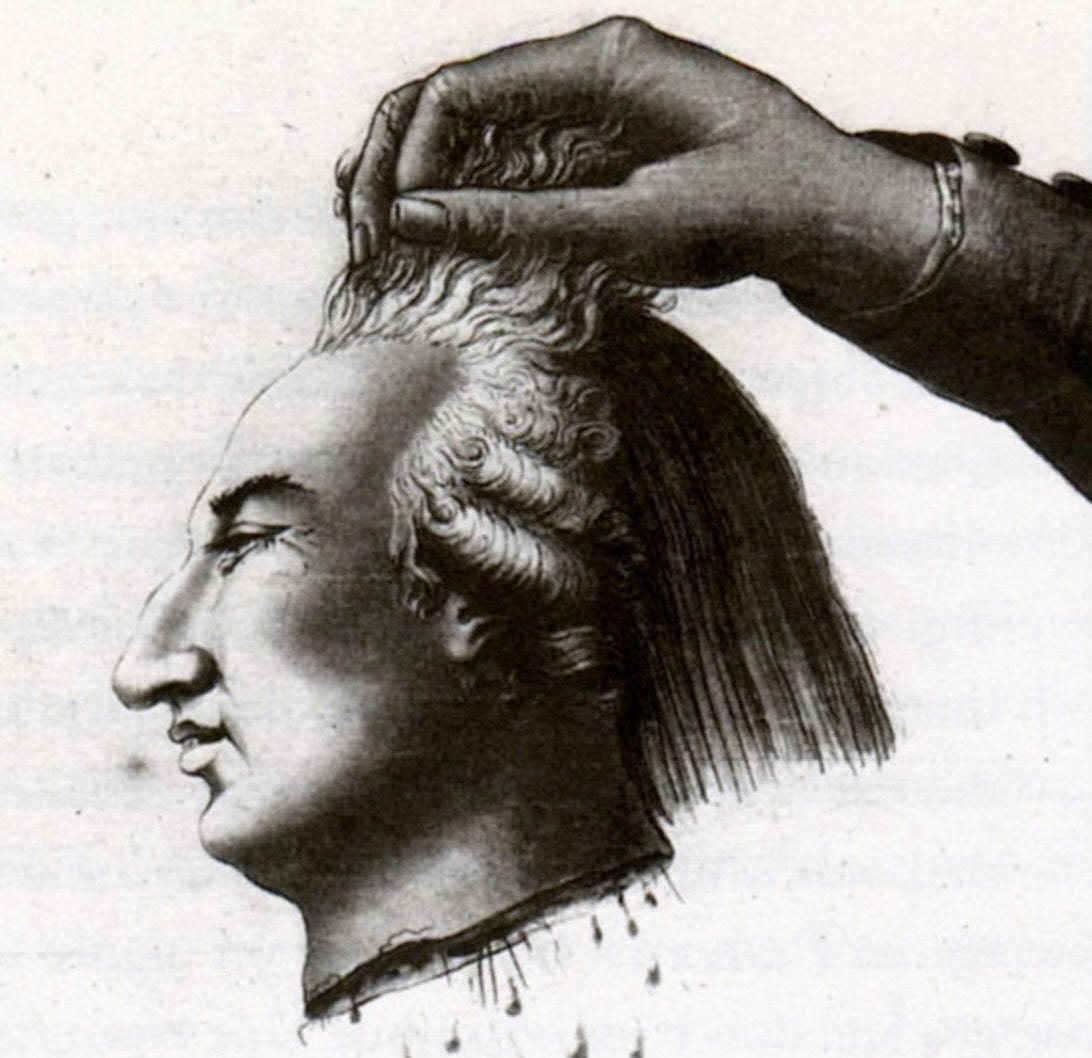
These days we think of the guillotine as an instrument of terror, but it arrived on the scene in 1792 as a new and improved way to dispatch the condemned. First of all, it was more democratic. All those elite criminals who swanned about with the social equivalent of an Amex Black Card would no longer receive first-class treatment. Instead, everyone would now fly economy into the afterlife. No footrests or free drinks. In 1793 even the king himself went under the blade — beheaded by the very same executioner who’d presided over Damiens’ torture thirty-six years earlier.
Second, it was more humane. Rather than maximizing suffering, Joseph-Ignace Guillotin, the champion of the device, aimed for speed and painlessness. Although some debate persisted about whether a severed head might still wink a minute or two after detachment, few were hankering for a return to the good old days of hours-long agony.
The guillotine blended violence with technology, making killing tidier and more administrative. Sure, there was still an executioner involved, but mostly his job consisted of stepping back to let gravity do the work. The result was visually horrific (it’s hard to sugarcoat the separation of a head from a body), but strangely automated. It was death turned into a Ford assembly line — fast and easy and efficient. They could crank out twenty heads an hour.
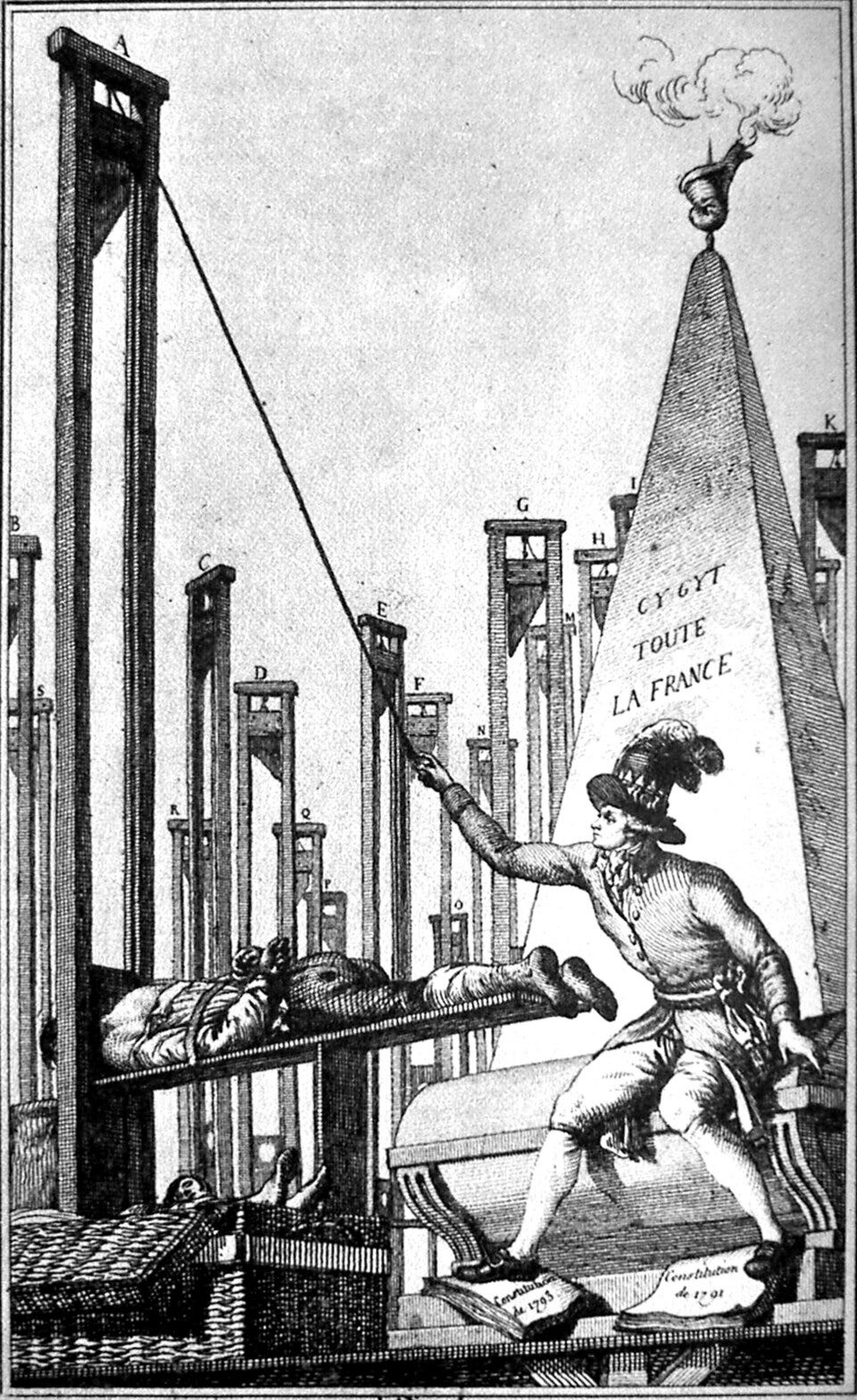
What survived from the older practice, however, was the importance of spectacle. Guillotinings remained public events for till 1939, and the practice had time to seep into the cultural imagination. In 1829, Victor Hugo’s Last Day of a Condemned Man captured the psychology of a criminal facing the blade. In A Tale of Two Cities (1859), Charles Dickens marches Sydney Carton up to the scaffold, where the rogue does a “far, far better thing than I have ever done.” Moreover, the so-called “Widow” was a photogenic device, its tall posts and angled blade making for dramatic scenery in various movies, looming in the background as a memento mori.
Still, all good things come to an end. By the middle of the twentieth century, capital punishment was getting a bad rap in France. Even then it was clear that certain verdicts were on shaky grounds, and “oops!” (“oups!” in the local tongue) is a word you never want to hear in a courtroom. In Mary Shelley’s Frankenstein a doctor manages to sew a head back onto a torso, but nobody else has pulled off that parlor trick.
France finally outlawed the death penalty, and that was that.
The show must go on
Aside from a brief attempt by the state of (where else?) Georgia to introduce the guillotine in 1996, the US has taken a slightly different path in putting folks to death. Even though we lag behind France by fifty years, the trend has still been to minimize suffering — or at least the appearance of it. It’s hard to poll folks after the fact to learn if dying by syringe is more pleasant than being fried in the electric chair, but one of them certainly seems more harrowing. And in our current state of affairs, looks are everything.
Which brings us back to the role of spectacle.
Spectacle isn’t just about what we see, but also what we imagine. Executions don’t take place in public anymore, but we still see them in our mind’s eye. On the stage of our imagination, lethal injection appears calm and medicalized, and even death by nitrogen inhalation feels OK — death by laughing gas.
Now, from a certain point of view, killing by bullet is a lot like the guillotine: fast and mechanized, with the executioner distanced spatially and morally from the victim. The only shift is cultural — from a society of knives to one of guns.
But when our orange-haired Master of National Ceremonies called for a return to the firing squad, humane killing was the last of his concerns. What he likes is how bullets put flesh back into dying. It squares with all the other recent efforts to sow fear and terror — like ICE killings in Minneapolis and bombed boats in the Caribbean. Captured on tape and in words, these spectacular specters loop on the screens of our TVs and phones and imaginations. We can’t get them out of our heads.
The future of punishment
Federal law allows the death penalty for a limited number of crimes, including treason and sedition, which happen to be the very infractions Trump has accused many of. I’m talking about hardened criminals like Barack Obama, Nancy Pelosi, and scores of members of Congress. (To be fair, a few members of that hallowed institution probably are guilty of treason. Just not the ones he’s going after.)
On that score, we probably all remember this rant on social media after some renegades reminded military officers that they should not follow illegal orders:
Their words cannot be allowed to stand. SEDITIOUS BEHAVIOR FROM TRAITORS!!! LOCK THEM UP??? […] SEDITIOUS BEHAVIOR, punishable by DEATH!
Violence-mongering is in this guy’s blood. One thing POTUS knows about (indeed, maybe the only thing) is how to put on a show, and all the talk about executions and firing squads is part of the act. His words and deeds are calculated to keep cruelty and vengeance at the top of the news feeds.
Of course, it’s not just traitors and seditionists who will face a squadron of riflemen. After all, we keep witnessing a pretty extreme version of No Kings protests — namely, attempts on the President’s life. (Last weekend’s event brings the tally to something like 19.) And these days, that’s a crime that smacks of regicide.
Which, of course, leads back to Robert-François Damiens and his very “bad day.” Isn’t that where the DOJ is headed — to the maximizing of pain and terror? It’s true we’re not yet at the point of drawing and quartering, but it can’t be far off. To heck with firing squads — bring back the molten lead!
And the guillotine? Well, suddenly it looks like rather small potatoes.
Hi Scott. I participated in the 1è Mai march in Paris with Indivisible Paris and others. My favorite pieces of spray-painted graffiti on the toilette stands along Blvd Voltaire were these two, juxtaposed: "La retraite à 60 ans et le kèbab à 5€" and "ICI on coupe la tête des rois". Well!!!
Is it more humane to strap a person to a bed in a semi-seret room and notice. that. injctions did not work? A guillotine minimizes , as does hanging. It just pretents to be painlesss